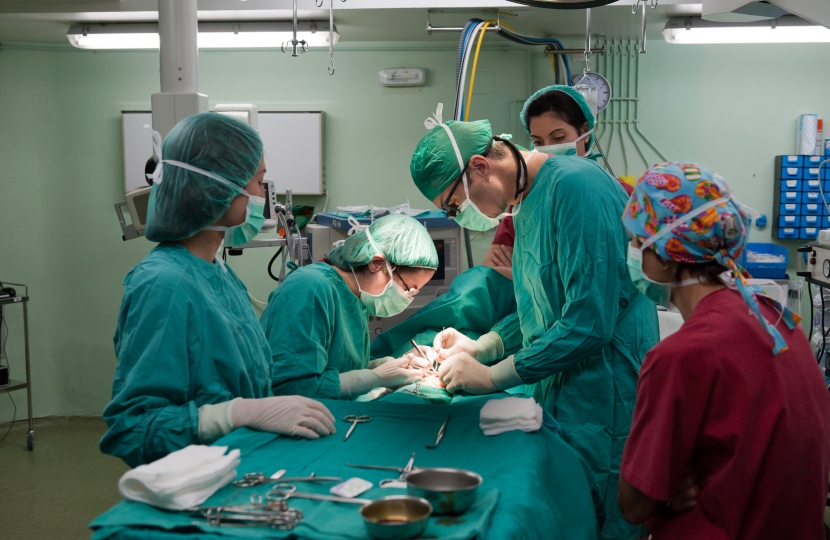
Last week the PM announced an additional £5.4 billion to support the NHS over the next six months to tackle waiting lists and to combat Covid-19. The funding includes infection control measures in our hospitals to keep patients and staff safe, and greater hospital discharge support to ensure people who are well enough to go home are able to do so. This is crucial in preventing bed blocking. It will also help with elective recovery – to restore services to pre-pandemic levels and reduce the backlog of routine surgeries and treatments that have built up over the past 18 months.
This funding is in addition to a £160 million initiative that the NHS recently launched to tackle waiting lists. The scheme is looking at new and innovative ways of operating, including testing facilities where people can get multiple tests done more quickly, a high-volume cataract service, and pop-up clinics so patients can be seen closer to home.
This two-pronged approach – committing more money and being more efficient with it – is essential because the scale of the NHS backlog is unprecedented. In June 2019 just over 1,000 patients were waiting more than a year for treatment. In June 2021 this had risen to more than 300,000. In total, 5.45 million people are now waiting for an operation or surgery.
However, there are signs of progress. Mental health services are back at pre-pandemic levels and treatment rates for cancer are also now back to usual levels, with nearly 19 out of 20 people starting treatment for the disease within one month. We can also play our part in reducing pressures on the NHS by getting a flu jab this autumn if eligible and by getting a Covid vaccine if we haven’t already (unvaccinated young people for example are ten times more likely to be hospitalised than those who are vaccinated). We can also reduce A&E pressures by only going there if we need serious or urgent medical care, rather than with conditions or illnesses that should be treated at a pharmacy or by our GP. Anyone unsure of where to go can ring the NHS 111 service. The service significantly reduces the number of people unnecessarily phoning 999 or going to A&E.
Last week the Government also announced that a new body will launch in October to tackle health disparities. Gender, ethnicity, and location within the UK can all have a bearing on health outcomes and the subject is worth serious attention. Those who are adversely affected deserve better and we can save the NHS huge amounts of money in process. 40% of all healthcare provision in the UK is spent on potentially preventable conditions and the future sustainability of our NHS depends as much (if not more) on preventing ill-health in the first place as it does on improving its capacity. Covid has presented extraordinary pressures for the NHS. The government is working at pace to provide the support now needed.